Chopping boards: wood or plastic, and how to look after them
The chopping board is the most used and least noticed tool in the kitchen. It decides how long your knives stay sharp, whether raw chicken ever meets the salad, and whether chopping is comfortable or annoying.
Wood: the kindest to knives
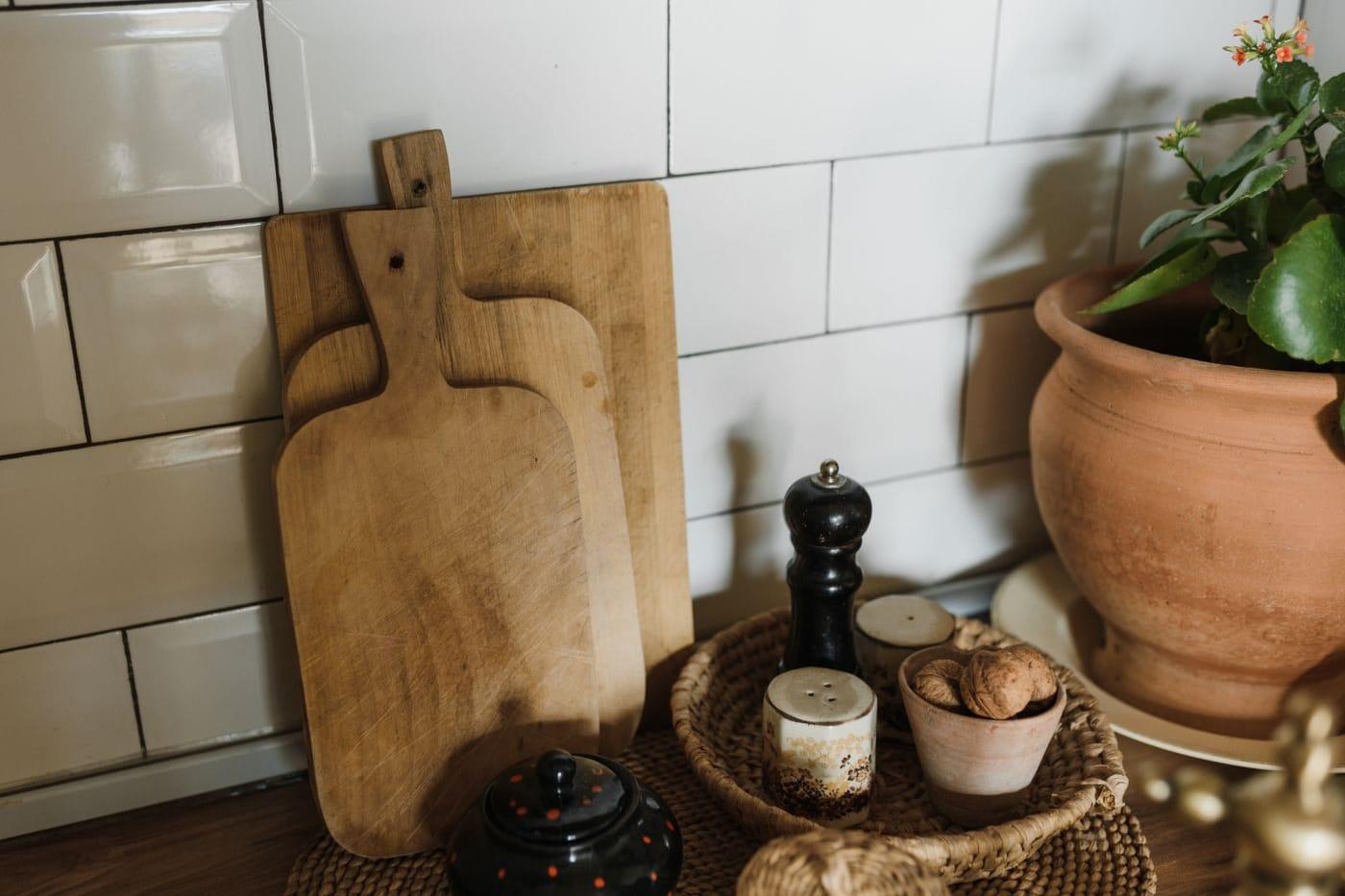
A wooden board is gentle on the blade, pleasant to work on and, well cared for, lasts for decades. Hardwoods with a fine grain are best: oak, beech, maple, ash or walnut.
You often hear that wood is less hygienic than plastic, but studies do not support that. Wood fibres draw moisture from the surface down into the board, where bacteria do not survive, and small cuts in wood partly close up again. There is one condition: the board must be washed and dried after use.
- End grain boards (made of blocks glued upright) are the kindest to knives, but cost more and weigh more.
- Bamboo is cheap and hard, but it blunts knives faster than real wood.
Plastic: handy for raw meat and fish
The great advantage of a plastic board is that it can go in the dishwasher, where hot water disinfects it. That makes it handy to keep one just for raw meat, poultry and fish.
Over time the knife leaves deep grooves in plastic that no longer close and that collect dirt. When the board is badly scored and the grooves have turned dark, it should be replaced. A plastic board is cheap, so do not hang on to it.
How many boards you need
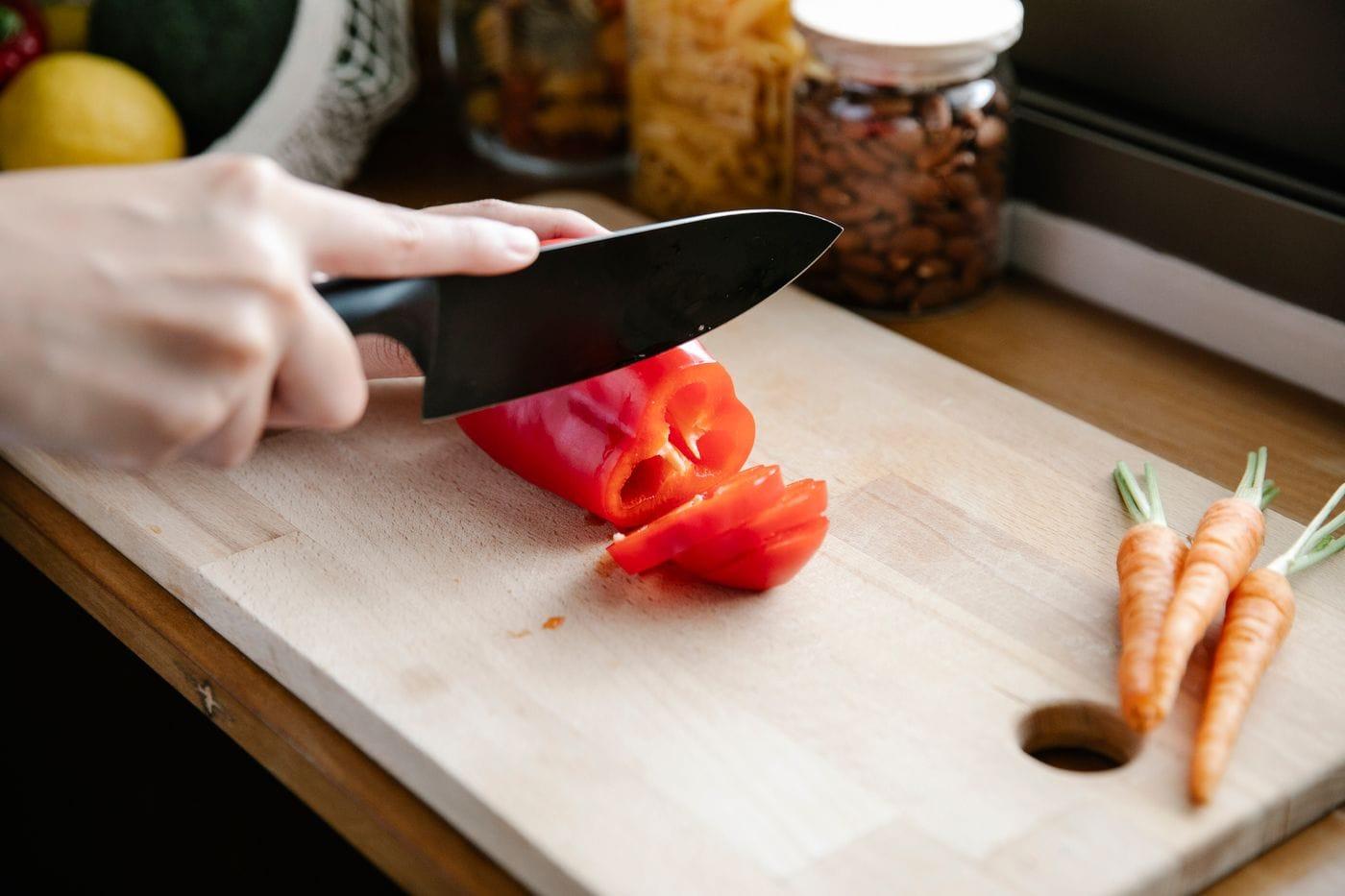
Two are enough. A large wooden board for vegetables, bread, herbs and cooked food, and one plastic board only for raw meat and fish. That way raw meat juices never reach food you will eat without cooking.
Choose a bigger board than you think you need: at least 30 × 40 cm, if your worktop allows. On a small board the chopped food falls over the edges and the knife has no room to move.
- Avoid glass, marble and granite boards: they look beautiful but blunt a knife in a few strokes.
- Put a damp cloth or kitchen paper under the board to stop it sliding.
How to wash a wooden board
- Wash it straight after use with hot water, washing up liquid and a brush, on both sides.
- Wipe it with a towel and dry it standing upright, so air reaches both sides.
- Never soak it in the sink or put it in the dishwasher: the wood swells, warps and cracks.
- Rub off smells and stains with coarse salt and half a lemon, and rinse after 5 minutes.
- After raw meat you can also wipe the board with a cloth dipped in vinegar.
How to oil a wooden board
Oil fills the pores of the wood, so the board absorbs less water, juice and odour and does not crack. Oil a new board three days in a row, then once a month or whenever the surface looks dry and greyish.
Use food grade mineral oil or a special board oil: pour it on, rub it in on all sides with a cloth, leave overnight and wipe off the excess in the morning. Do not use olive or sunflower oil: in time they turn rancid in the wood and the board starts to smell unpleasant.
In short
- A wooden board for everyday use, a plastic one for raw meat and fish.
- Wash straight away, dry upright, never soak.
- Oil a wooden board with mineral oil once a month.
- Replace a badly scored plastic board.