Cast iron pans: how to season, clean and care for them
A cast iron pan is the only piece of cookware that gets better with age. It needs just three things: a thin film of oil, heat and dryness. Here is everything you need to know to keep a grandmother's pan or a brand new one from sticking and rusting.
Why cast iron is worth it
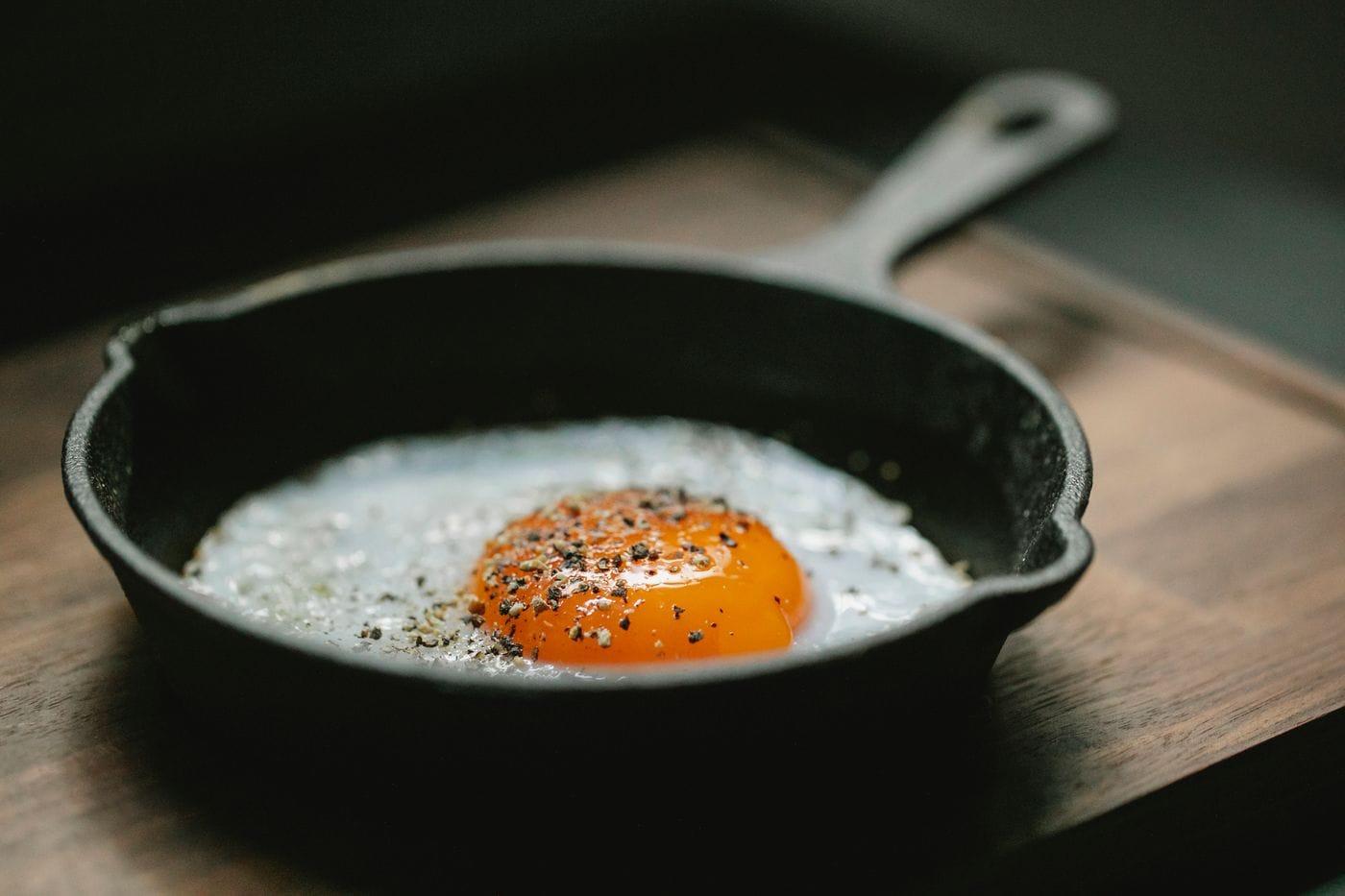
Cast iron heats slowly but holds its heat for a long time and evenly. When you put a cold steak or potatoes in the pan it does not cool down, so the food fries and browns instead of stewing in its own juice.
It has no coating that can peel off. The non stick surface is made by the oil itself, which hardens in the heat into a thin, tough layer. This layer is called seasoning, and it can be renewed as many times as you like.
- Works on every hob, including induction, and in the oven or over a campfire.
- Stands up to metal spatulas and very high temperatures.
- Lasts for decades: many pans outlive their owners.
How to season a new pan
Most new pans are sold pre seasoned, but one or two extra layers at home do them good. For an old or rusty pan this process is essential.
- Wash the pan with hot water and a little washing up liquid and dry it thoroughly.
- Rub the whole pan, including the outside and the handle, with a very thin layer of rapeseed, sunflower or linseed oil.
- Wipe the oil off with clean kitchen paper as if you had changed your mind. Only what cannot be wiped away should stay on the surface.
- Put the pan upside down in a 230 °C oven for 1 hour. Place a tray underneath to catch drips.
- Switch off the oven and let the pan cool inside. For an even better result repeat 2 to 3 times.
How to wash it after cooking
The myth that cast iron must never touch soap comes from the days when soap contained lye. Modern washing up liquid does not harm the seasoning, as long as the pan is not left to soak.
- Wash the pan while still warm with hot water and a brush or the soft side of a sponge.
- Scrub off burnt bits with coarse salt and a little oil, or boil some water in the pan and scrape with a wooden spatula.
- Dry straight away with a towel and warm on the hob for a minute to drive off the last moisture.
- Rub with a few drops of oil and wipe off the excess.
What to cook in it, and what to avoid
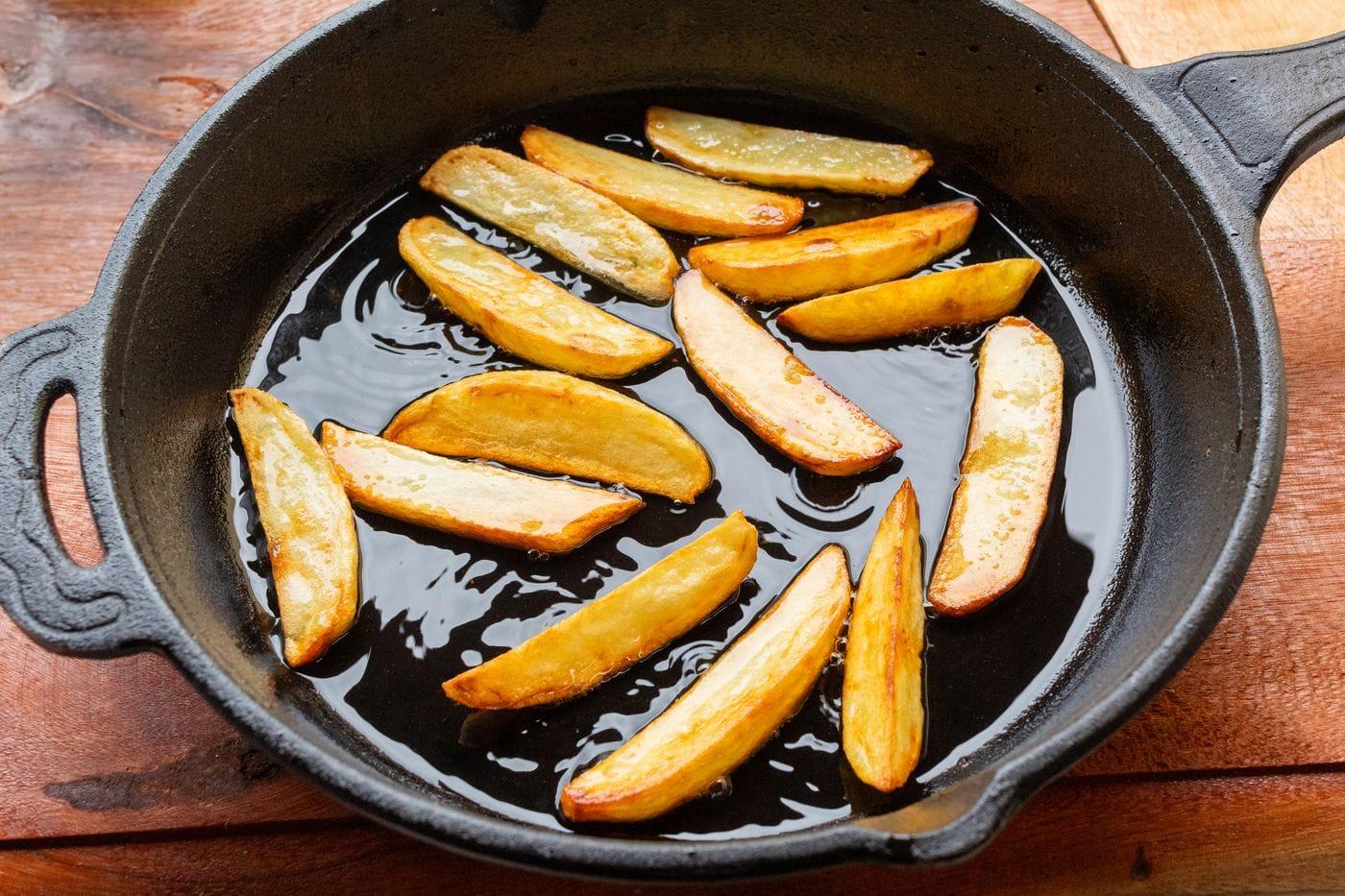
Cast iron is at its best where strong, even heat is needed: steaks, burgers, fried potatoes, pancakes, cornbread and anything that moves from the hob to the oven.
- For the first few months avoid simmering tomato sauce, wine or lemon for a long time: acid dissolves fresh seasoning and can give the food a metallic taste.
- Leave delicate fish and scrambled eggs until the pan is well broken in.
- Always heat the pan first, and only then add the oil and the food.
If the pan rusts or food sticks
Rust is not the end of a pan. Scrub it with steel wool or a coarse scourer down to grey metal, wash, dry and season again as described above.
If food starts to stick or the surface turns tacky, the usual cause is too thick a layer of oil or a pan that was not hot enough. Scrub the sticky layer off with salt and season the pan again with a thinner film of oil.
In short
- Never soak it and never put it in the dishwasher.
- After every wash, dry it on the hob and oil it.
- The more you fry, the better the surface becomes.
- Store it somewhere dry, with kitchen paper between stacked pans.