Kitchen knives: the three you really need and how to keep them sharp
A block of twelve knives looks impressive, but day to day your hand reaches for two or three. It is better to buy three good knives and learn to keep them sharp: a sharp knife cuts more precisely, faster and, contrary to what you might think, is safer than a blunt one.
The three knives that are enough
With these three knives you can cook almost anything. Everything else, such as a filleting knife or a cleaver, is a pleasant extra, not a necessity.
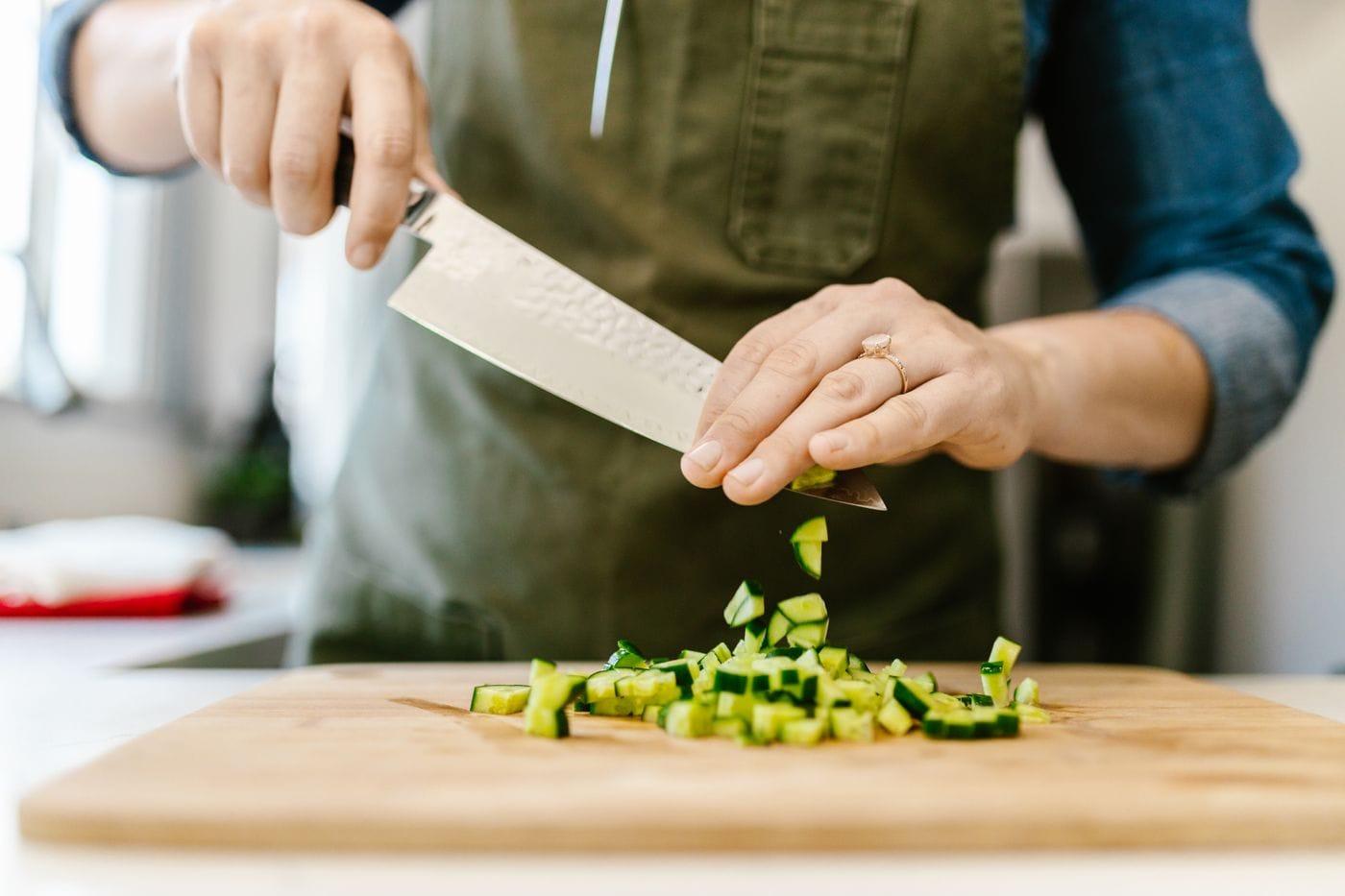
- A chef's knife with an 18 to 20 cm blade: it does nine tenths of the work, from chopping onions to slicing meat.
- A small paring knife with an 8 to 10 cm blade: for peeling, coring and small jobs in the hand.
- A serrated bread knife: for crusty bread, tomatoes and cakes with a soft middle.
How to choose a chef's knife
What matters most is how the knife sits in your hand. Pick it up in the shop: it should balance where the blade meets the handle, and feel neither heavy nor toy light.
European style knives are made of softer steel: they dull sooner but are tough and easy to sharpen. Japanese knives are harder and thinner and cut like a razor, but they can chip if you hack at bones or frozen food. For a first knife, the European style is the safer choice.
A good knife does not have to come in a set. For 40 to 80 euros you can get a chef's knife that will last twenty years.
Honing and sharpening are not the same thing
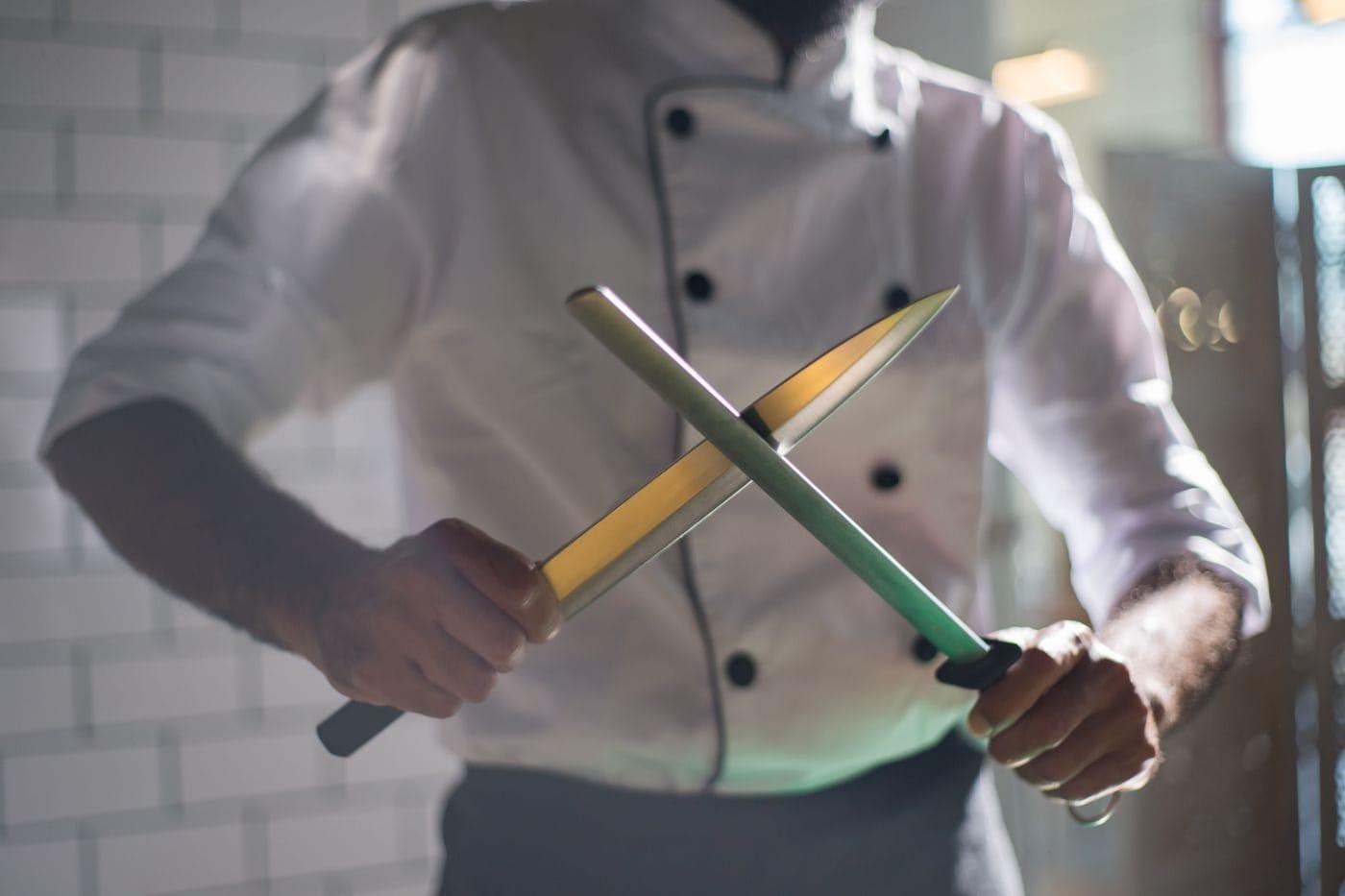
As you cut, the thin edge of the blade bends to one side and the knife feels blunt even though no metal has worn away. A honing steel straightens that edge. Draw the blade along the steel at an angle of about 15 to 20 degrees, 5 times on each side, before every bigger cutting job.
Sharpening removes metal and creates a new edge. At home it is done with a whetstone or a pull through sharpener two to four times a year. If you do not want to learn the whetstone, take your knives to a professional once a year.
- The tomato test: a sharp knife cuts through tomato skin under its own weight, without pressing.
- The paper test: a sharp knife slices cleanly through a sheet of paper held in the air.
How to wash and store knives
- Wash by hand straight after use and dry. The dishwasher damages both blade and handle.
- Do not leave a knife in the sink under other dishes: the edge suffers, and so do fingers.
- Store on a magnetic strip, in a knife block or with a blade guard, not loose in a drawer with other tools.
- Cut on a wooden or plastic board. Glass, stone and plates blunt the edge in a few strokes.
- Push chopped food off the board with the spine of the knife, not the edge.
Why a blunt knife is more dangerous
A blunt knife does not bite into the food but slides over its surface, and to force it you have to press harder. That is exactly when it slips onto your fingers. A sharp knife goes where you point it.
Hold the food with curled fingers, tucking the fingertips behind the knuckles: the side of the blade glides along the knuckles and the fingertips stay safe. Put a damp cloth under the board to stop it sliding.